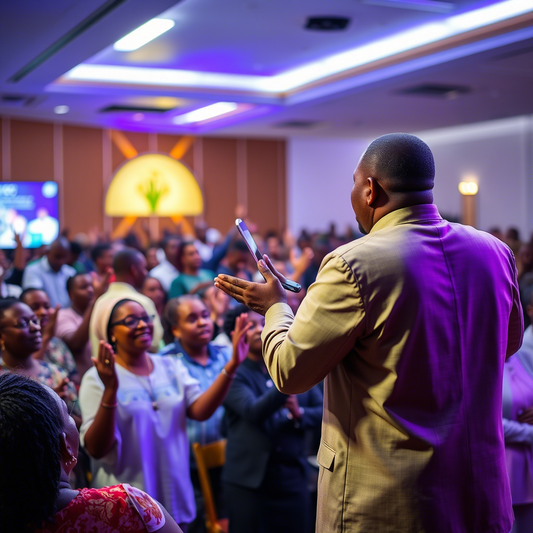
PRAISE YE THE LORD
Share
Praise Ye the Lord: The Eternal Call of Hallelujah
In the lexicon of faith, few phrases carry as much weight, history, and raw spiritual power as the command: "Praise ye the Lord."
Transliterated from the Hebrew word Hallelujah, this expression is more than a religious exclamation; it is a foundational pillar of biblical worship. It appears as a recurring theme throughout the Old and New Testaments, serving as both an invitation to the believer and a demand for the recognition of God’s sovereignty.
1. The Meaning of the Mandate
The phrase "Praise ye the Lord" comes from two Hebrew words: Hallelu (a plural imperative command to praise) and Yah (the shortened, poetic form of Yahweh, the covenant name of God).
When we say "Hallelujah," we are not merely expressing a feeling; we are fulfilling a command. The "ye" indicates that this is a collective call. It is an invitation for the entire community of creation—angels, humans, and nature itself—to turn their attention toward the Creator.
2. The Psalms: The Great Hallelujah
The Book of Psalms serves as the primary "hymnbook" for this expression. Specifically, Psalms 113 through 118 are known as the Hallel (Praise) Psalms, traditionally sung during the Passover.
However, the crescendo of this theme is found in the final five chapters of the Bible’s songbook (Psalms 146–150). Each of these psalms begins and ends with the phrase "Praise ye the Lord."
- Psalm 150, the grand finale of the Psalter, provides a comprehensive guide to praise:
- Where? In His sanctuary and His mighty heavens.
- Why? For His mighty acts and His surpassing greatness.
- How? With trumpets, harps, strings, dance, and loud cymbals.
3. Why Must We Praise?
The Bible suggests that praise is not for God’s benefit—He is already perfect and self-sufficient—but for ours.
- Praise Aligns Our Perspective: When we praise the Lord, we shift our focus from our problems to His power. It reminds us that God is larger than our circumstances.
- Praise is a Response to Grace: We praise Him for His "lovingkindness and His truth" (Psalm 117:2). It is the natural reaction of a redeemed soul to its Redeemer.
- Praise Defeats the Enemy: In the biblical narrative, praise was often a weapon of spiritual warfare. When King Jehoshaphat sent the praisers out ahead of the army, the Lord set ambushes against their enemies (2 Chronicles 20:21-22).
4. The New Testament Echo
In the New Testament, the Greek equivalent of "Praise ye the Lord" continues to resonate. The most striking occurrence is found in Revelation 19. After the fall of Babylon and the triumph of God’s kingdom, a "great multitude" in heaven cries out:
"Alleluia; Salvation, and glory, and honour, and power, unto the Lord our God... Alleluia: for the Lord God omnipotent reigneth." (Revelation 19:1, 6)
Here, the "Praise ye the Lord" of the Psalms finds its ultimate fulfillment. It becomes the eternal song of the redeemed, celebrating the final victory of light over darkness.
5. A Lifestyle of Praise
To "Praise ye the Lord" is not an act reserved for Sunday mornings or musical interludes. In the biblical sense, praise is a lifestyle.
- Hebrews 13:15 calls it a "sacrifice of praise," suggesting that we should praise God even when it is difficult or when we don't "feel" like it.
- 1 Thessalonians 5:18 instructs us to give thanks in all circumstances.